Introduction: Facing the core challenges in industrial environments
In demanding industrial settings, equipment and cables face relentless threats. Extreme temperatures, flying sparks, molten metal splatter, and abrasive conditions are not merely inconveniences—they are primary causes of downtime, safety hazards, and costly repairs. A critical question arises: how can we effectively protect vital components to ensure operational continuity and personnel safety?
The answer lies in deploying advanced protective solutions engineered specifically for these extremes. At the forefront of these solutions is the High Silica Fiber Sleeve , a material designed to withstand where others fail, providing a reliable barrier against the core challenges of modern industry.
Part 1: What is High Silica Fiber Sleeve? - Beyond ordinary "high temperature protective sleeve""
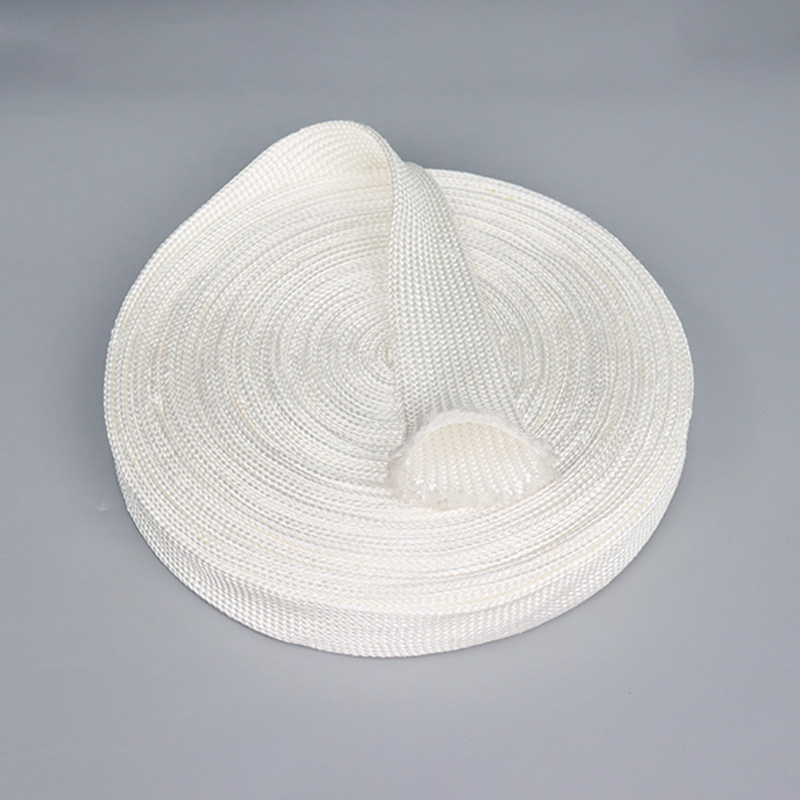
A High Silica Fiber Sleeve is a specialized engineering textile meticulously constructed from high-purity amorphous silica (SiO₂) fibers. These fibers are woven into a highly flexible, seamless tube, resulting in a protective solution that far surpasses the capabilities of conventional high-temperature protection sleeving. While many materials claim thermal resistance, High Silica Fiber Sleeve operates in a performance league of its own, offering a unique combination of properties that make it indispensable in the most demanding applications.
To truly appreciate its superiority, it is helpful to compare its key parameters against those of a common standard-grade fiberglass sleeving. The differences are not incremental; they are transformative.
Key Parameter Comparison: High Silica vs. Standard Fiberglass Sleeving
| Parameter | High Silica Fiber Sleeve | Standard Fiberglass Sleeving | Performance Implication |
|---|---|---|---|
| Continuous Operating Temperature | Up to 1200°C (2192°F) | Typically up to 550°C (1022°F) | Provides reliable protection in ultra-high-temperature environments like steel manufacturing or near exhaust systems, where fiberglass would fail. |
| Melting Point | Approximately 1700°C (3092°F) | Approximately 850°C (1562°F) | Will not melt or drip when exposed to extreme thermal shock or molten metal splatter, a critical safety feature. |
| Thermal Conductivity | Very Low | Low | Offers superior thermal insulation, protecting both the enclosed components and the surrounding equipment from radiant heat. |
| Fire Resistance | Inherently Incombustible | May contain combustible binders that burn off | Truly fireproof; it qualifies as an ultimate fireproof fiber sleeve , maintaining its integrity and forming a protective barrier even in direct flame. |
| Dielectric Strength | Excellent | Good | Provides outstanding electrical insulation, making it an ideal industrial insulation sleeving for high-voltage applications in challenging conditions. |
Core Characteristics Elaborated:
The parameters in the table translate directly into three defining characteristics that elevate this material:
- Extreme High-Temperature Resilience: This is the cornerstone of its identity. The incredibly high silica content allows the sleeve to withstand continuous exposure to temperatures that would instantly destroy organic or lower-grade inorganic materials. It does not shrink, become brittle, or lose its structural integrity. This isn't just a "high-temperature sleeve"; it's a ultra -high-temperature solution.
- Superior Fire Barrier Capability: A true fireproof fiber sleeve must do more than just resist burning. High Silica Fiber Sleeve is inherently non-flammable. In a fire, it forms a protective, insulating char that continues to shield the critical components within, such as cables or hoses, buying invaluable time for emergency systems to function. This passive fire protection is a key asset for safety-critical installations.
- Excellent Electrical and Thermal Insulation: The material's composition grants it outstanding dielectric properties, effectively preventing short circuits and electrical leakage. This makes it a premier choice for industrial insulation sleeving , especially in environments where high temperatures coincide with high voltages. Its low thermal conductivity also ensures that heat is contained or deflected, protecting sensitive adjacent equipment.
In summary, the High Silica Fiber Sleeve is not merely an alternative to standard protective sleeving. It is a fundamental upgrade, engineered for scenarios where failure is not an option. Its exceptional parameter set redefines the boundaries of what a flexible protective sleeve can achieve.
Part 2: Why choose it? Five major application scenarios of High Silica Fiber Sleeve
Understanding the material's properties is one thing; seeing its value in action is another. The true justification for selecting High Silica Fiber Sleeve lies in its proven performance across a range of demanding industrial scenarios. It is in these harsh environments that it transitions from a simple component to a critical safeguard, ensuring operational continuity and personnel safety.
The following table and detailed scenarios illustrate how its parameters deliver tangible solutions.
Application Scenario & Performance Advantage Summary
| Application Scenario | Primary Threat | How High Silica Fiber Sleeve Addresses the Challenge | Key Performance Parameter Utilized |
|---|---|---|---|
| 1. Welding & Metal Fabrication | Molten metal spatter, intense sparks, abrasive slag | Forms a sacrificial, non-absorbent barrier that encapsulates cables and hoses. It does not melt or burn through, preventing costly damage and fluid line ruptures. | Melting Point (~1700°C): Withstands direct contact with molten metal. Abrasion Resistance. |
| 2. Automotive & Aerospace Engine Bays | Sustained high radiant heat, fluctuating temperatures, potential fluid fires | Protects sensitive wiring looms, fuel lines, and hydraulic hoses from heat-induced degradation, preventing short circuits and maintaining system integrity. | Continuous High-Temp Resistance (up to 1200°C): Handles proximity to exhausts and turbochargers. Fireproof Nature. |
| 3. Steel Mills & Foundries | Extreme ambient heat, radiant thermal flux, molten metal splash | Acts as the ultimate heat-resistant cable sheath for critical power and control lines operating near furnaces, ladles, and casting lines. | Continuous High-Temp Resistance & Melting Point: Survives in environments where temperatures exceed the limits of most polymers and metals. |
| 4. Power Generation & Chemical Plants | High voltages combined with corrosive atmospheres and fire risks | Serves as a robust industrial insulation sleeving that provides reliable dielectric protection while also being immune to chemical degradation and flame. | Dielectric Strength & Incombustibility: Ensures electrical safety even in the event of an arc or fire. |
| 5. Public Infrastructure & Mass Transit | The need for passive fire protection to ensure safe evacuation | Used in cable tray systems and around structural elements as a fireproof fiber sleeve to maintain circuit integrity and contain fires for a specified duration. | Fire Barrier Capability & Low Smoke Emission: Prevents the spread of fire and smoke, crucial for life safety systems. |
Detailed Elaboration of Scenarios:
- Scenario 1: Welding & Metal Fabrication – The Ultimate Molten Metal Protective Sleeve
In welding zones, the primary threats are momentary but catastrophic. A single droplet of molten steel can instantly burn through a standard rubber hose or plastic cable conduit, leading to hydraulic failure, electrical shorts, or even fire. High Silica Fiber Sleeve performs here as a dedicated molten metal protective sleeve . Its inorganic fibers will not combust or melt, causing the spatter to bead up and roll off. This sacrificial layer protects the expensive components within, drastically reducing downtime and repair costs, making it an essential safety measure in any fabrication shop. - Scenario 2: Automotive & Aerospace Engine Bays – Unmatched High-Temperature Protection
Modern engine compartments are densely packed and thermally hostile. Wiring harnesses and fluid lines are routed dangerously close to exhaust manifolds and turbochargers. Standard sleeves can bake, crack, and flake away over time. High Silica Fiber Sleeve provides sustained high-temperature protection , reflecting radiant heat and withstanding direct contact with hot surfaces. This preserves the insulation of wires and the integrity of fluid lines, preventing engine malfunctions and eliminating a potential ignition source, thereby ensuring vehicle reliability and safety. - Scenario 3: Steel Mills & Foundries – The Reliable Heat-Resistant Cable Sheath
This is perhaps the most demanding environment. Ambient temperatures can be extreme, and accidental splash from molten metal is a constant risk. Standard cable insulation can fail rapidly. Here, High Silica Sleeves are deployed as the last line of defense for essential instrumentation and power cables. By surviving direct exposure to conditions that would destroy metal conduit, they ensure that critical processes like furnace control or conveyor systems remain operational, preventing extraordinarily expensive production halts. - Scenario 4: Power Generation & Chemical Plants – The Robust Industrial Insulation Sleeving
These facilities require materials that can perform under multiple stressors. A sleeve must provide excellent electrical insulation while also resisting chemical exposure and containing any potential fires. High Silica Fiber Sleeve meets this multi-faceted challenge. Its high dielectric strength prevents arc tracking, its silica base is resistant to many corrosive chemicals, and its incombustible nature helps to localize and prevent the spread of fire, protecting both equipment and personnel. - Scenario 5: Public Infrastructure & Mass Transit – The Critical Fireproof Fiber Sleeve
In tunnels, subways, and high-rise buildings, the priority shifts from process protection to life safety. Cable failures can disable lighting, ventilation, and emergency systems during a fire. High Silica Fiber Sleeves are used to bundle and protect these critical cables. In a fire, they create a stable, insulating char that maintains circuit integrity for a critical period, allowing emergency systems to function and facilitating the safe evacuation of occupants. Its low smoke emission is an additional benefit, maintaining visibility.
Part 3: How to evaluate and select? — Key parameter guide
Selecting the right High Silica Fiber Sleeve is not a one-size-fits-all process. It requires a meticulous evaluation of your application's specific demands to ensure optimal performance, safety, and cost-effectiveness. Moving beyond the generic label and understanding the following key technical parameters is crucial for making an informed decision. This guide will help you navigate the critical specifications.
The following table outlines the core parameters that must guide your selection process.
Key Parameter Evaluation Table for High Silica Fiber Sleeve Selection
| Parameter | Why It Matters | Key Questions to Ask | Potential Consequence of Incorrect Selection |
|---|---|---|---|
| 1. Temperature Profile | Defines the operational envelope of the sleeve. | What is the continuous ambient temperature? What are the peak intermittent temperatures (e.g., from flame or radiant heat)? | Sleeve degradation, embrittlement, and catastrophic failure under thermal overload. |
| 2. Internal Diameter & Wall Thickness | Ensures a proper physical fit and determines protection level. | What is the outer diameter of the cable, hose, or component to be protected? Is a snug or loose fit required? How much abrasion resistance is needed? | Difficulty in installation, inadequate protection if too loose, or damage to the component during installation if too tight. |
| 3. Flexibility & Bend Radius | Impacts ease of installation in complex routing paths. | How tight are the bends and curves in the application? Will the sleeve need to be flexed during normal operation? | Kinking of the sleeve, which creates weak points and compromises protection; difficult or impossible installation. |
| 4. Chemical & Environmental Resistance | Determines longevity in specific operational contexts. | Is the sleeve exposed to oils, solvents, acids, alkalis, or salt spray? Is there exposure to UV radiation (outdoor use)? | Accelerated degradation, loss of tensile strength, and reduced service life of the sleeve. |
| 5. Industry Certifications & Standards | Provides independent verification of performance and safety claims. | Does the application require compliance with specific industry standards (e.g., UL, MIL, ASTM, EN)? | Failure to meet safety regulations, liability issues, and rejection of the component in regulated industries. |
Detailed Elaboration of Selection Criteria:
- 1. Deconstructing the Temperature Profile
The term "high temperature" is not sufficient. You must differentiate between continuous exposure and short-term thermal shocks.- Continuous Operating Temperature: This is the maximum temperature at which the sleeve can perform indefinitely without significant degradation of its physical or insulating properties. For a High Silica Fiber Sleeve, this is typically in the range of 1000°C to 1200°C. Exceeding this limit will drastically shorten its lifespan.
- Intermittent/Peak Temperature: This is the maximum temperature the sleeve can withstand for a very short duration (seconds to minutes), such as a direct flame impingement or a splash of molten metal. This is where the sleeve's ~1700°C melting point is critical. Understanding both aspects ensures the sleeve can handle both the everyday heat and the exceptional emergency.
- 2. Sizing for Performance: Beyond Simple Fit
Choosing the correct internal diameter (ID) is fundamental. A sleeve that is too tight will be impossible to install over connectors or may compress and damage sensitive cables. A sleeve that is too loose will not provide consistent protection and may snag on surrounding equipment. Always refer to the manufacturer's sizing chart, which typically recommends an ID based on the bundle diameter. Similarly, wall thickness directly influences abrasion resistance, durability, and thermal insulation. A thicker wall offers more robust protection but may be slightly less flexible. - 3. The Criticality of Flexibility and Bend Radius
A sleeve that is overly rigid is impractical for modern, tightly packaged machinery. Flexibility determines how easily it can be routed around corners and through conduits. The minimum bend radius is a specific parameter that indicates the smallest curve the sleeve can make without kinking, collapsing, or permanently deforming. Installing a sleeve at a bend tighter than its minimum radius creates a weak spot that is highly vulnerable to abrasion and impact, and it can compromise the protected component's ability to be serviced or removed. - 4. Assessing the Chemical and Operational Environment
While inherently resistant to many factors, the specific environment can affect long-term performance.- Chemical Exposure: Contact with specific strong acids or alkalis may attack the silica fibers over time. Assess exposure to hydraulic fluids, fuels, or cleaning solvents.
- Abrasion and Mechanical Abuse: In high-vibration areas or where contact with sharp edges is possible, a sleeve with a tighter weave or a specific coating (though this may affect temperature rating) might be necessary.
- Weathering: For outdoor applications, resistance to UV radiation and moisture, while generally good, should be confirmed for the expected service life.
- 5. The Non-Negotiable: Verifying Certifications and Standards
Do not rely solely on marketing claims. Independent certifications from recognized bodies like Underwriters Laboratories (UL) or meeting military specifications (MIL) provide objective proof that the product has been tested and performs as advertised. For example, a UL certification for electrical insulation or flame resistance is often a mandatory requirement in construction and public transportation projects. Always request test reports and certification documents to validate the product's claims against the required standards for your industry.
By systematically evaluating these parameters against your application's specific requirements, you can confidently select a High Silica Fiber Sleeve that will deliver reliable, long-lasting protection.
Conclusion: Invest in safety and reliability
In the demanding landscape of modern industry, the line between operational success and costly failure is often drawn by the choice of the most fundamental components. As we have explored, the High Silica Fiber Sleeve is not merely an accessory; it is a critical engineering safeguard. Selecting this material is a strategic decision to invest directly in long-term safety, unwavering reliability, and ultimate peace of mind.
The value proposition of High Silica Fiber Sleeve becomes undeniable when viewed through the lens of risk mitigation. The following table contrasts the initial cost-centric view with the long-term value-driven perspective this material provides.
| Perspective | The Conventional (Cost-First) Approach | The High Silica (Value & Safety-First) Approach |
|---|---|---|
| Core Focus | Minimizing initial purchase price. | Maximizing asset protection and minimizing lifetime cost. |
| Response to Extreme Heat | Uses materials with lower temperature thresholds, risking melting, brittleness, and failure under unexpected thermal events. | Provides a proven, reliable barrier against continuous high heat and sudden thermal shocks, ensuring system integrity. |
| Response to Fire Hazard | Relies on materials that may slow fire but can ultimately combust or emit toxic smoke. | Offers an inherently incombustible solution that acts as a passive fire barrier, protecting critical infrastructure and saving lives. |
| Long-Term Financial Impact | Lower upfront cost, but high risk of unplanned downtime, expensive cable/hose replacements, and production halts due to failure. | Higher initial investment, but delivers immense ROI through prevented downtime, avoided repair costs, and uninterrupted production. |
| Contribution to Safety Culture | Treats protection as a compliance box to be checked. | Embeds a core layer of safety, protecting both personnel and high-value capital equipment from catastrophic events. |
The initial price of a protective component is a fleeting figure, quickly forgotten after a single incident that it could have prevented. The true cost of component failure, however, is measured on a vastly different scale: in hours of production downtime, in the expense of replacing complex wiring looms or hydraulic systems, and most importantly, in the immeasurable value of human safety. A compromised sleeve in a welding station can lead to a ruptured hydraulic line; a degraded sleeve in an engine bay can cause a short circuit and fire; an inadequate sleeve in a public building can fail to contain a fire, with tragic consequences.
The High Silica Fiber Sleeve stands as a robust answer to these risks. It is a holistic solution that seamlessly integrates extreme high-temperature protection , inherent fireproofing , and superior electrical insulation into a single, flexible product. It is the material you specify not for the 99% of normal operations, but for the 1% of abnormal, catastrophic events where its performance becomes priceless.
Therefore, do not ask about the cost of a High Silica Fiber Sleeve. Instead, consider the profound cost of not having one. By choosing this advanced protective solution, you are making a conscious investment in the resilience of your operations and the sanctity of your safety protocols. You are not just buying a sleeve; you are buying confidence, durability, and the assurance that your most critical systems are shielded by the best defense modern materials science can offer.
Frequently Asked Questions (FAQ)
- What is the main advantage of High Silica Fiber Sleeve over regular fiberglass sleeving?
The primary advantage is its ability to withstand extreme temperatures. While standard fiberglass sleeving typically fails around 550°C, High Silica Fiber Sleeve can operate continuously up to 1200°C and will not melt until approximately 1700°C. This makes it the only viable option for applications involving molten metal, intense radiant heat, or direct flame exposure. - Can it be used for both thermal and electrical protection?
Yes, absolutely. This is a key benefit. It serves as a dual-purpose solution, providing excellent thermal insulation against high heat while also offering high dielectric strength for reliable electrical insulation. This makes it ideal for protecting power cables in high-temperature and high-risk environments. - How do I choose the right size for my application?
The most critical step is to accurately measure the outer diameter of the cable, hose, or component bundle you need to protect. The internal diameter of the sleeve should be slightly larger than this measurement to allow for easy installation while ensuring a snug fit. Always consult the manufacturer's sizing guide, which will recommend the appropriate internal diameter based on your bundle's size.